AI Continuity Needs Reliable Handoffs
A useful AI partner should carry context through onboarding, account creation, conversation, and follow-through without forcing the user to rebuild the story.
The most frustrating failure in an AI relationship is often not a wrong answer. It is the moment the system loses the thread. You have already explained the pressure, the people involved, the boundary you are trying to protect, and the outcome you need. Then a new screen opens and the story disappears.
The cost is larger than another prompt. You have to reconstruct your state of mind. You edit away details because repeating them feels exhausting. The advice becomes generic because the context has thinned out. A tool that sounded intelligent a minute ago begins to feel like a stranger.
Continuity is the promise. Reliable handoffs are how a product keeps it.
AI amnesia is a product-flow problem
Memory matters, but memory alone does not create continuity. The system also has to carry the right state across each transition: choosing a partner, completing onboarding, creating an account, starting the first conversation, opening a focused room, returning to chat, and following up later.
Each transition is a handoff. If one fails, users experience the whole relationship as unreliable. They should not have to guess whether onboarding saved, whether registration created the same identity, whether a room result returned to the conversation, or whether a promise became an open loop.
Know who is continuing
Partner choice, onboarding state, and account identity should resolve into one coherent user journey.
Carry what matters
The next conversation should use relevant, approved context without making the user repeat the whole story.
Keep the next move attached
A decision, reminder, brief, or relationship follow-up should remain connected to the conversation that created it.
Return without losing the thread
When a step fails or pauses, the product should recover visibly and preserve the user's place.
What continuity should feel like
Good continuity is quiet. The user asks a question and receives a direct answer. Relevant history appears when it helps. Unknowns stay labeled as unknowns. A focused workflow can deepen the work, then return its useful result to the main conversation. The system remembers the promise without pretending to know facts that were never provided.
This changes the role of AI. It moves from a clever response generator toward a thinking partner: one that can support preparation before a difficult meeting, clarity during a decision, and follow-through after the moment has passed.
The WizeMe.APP approach
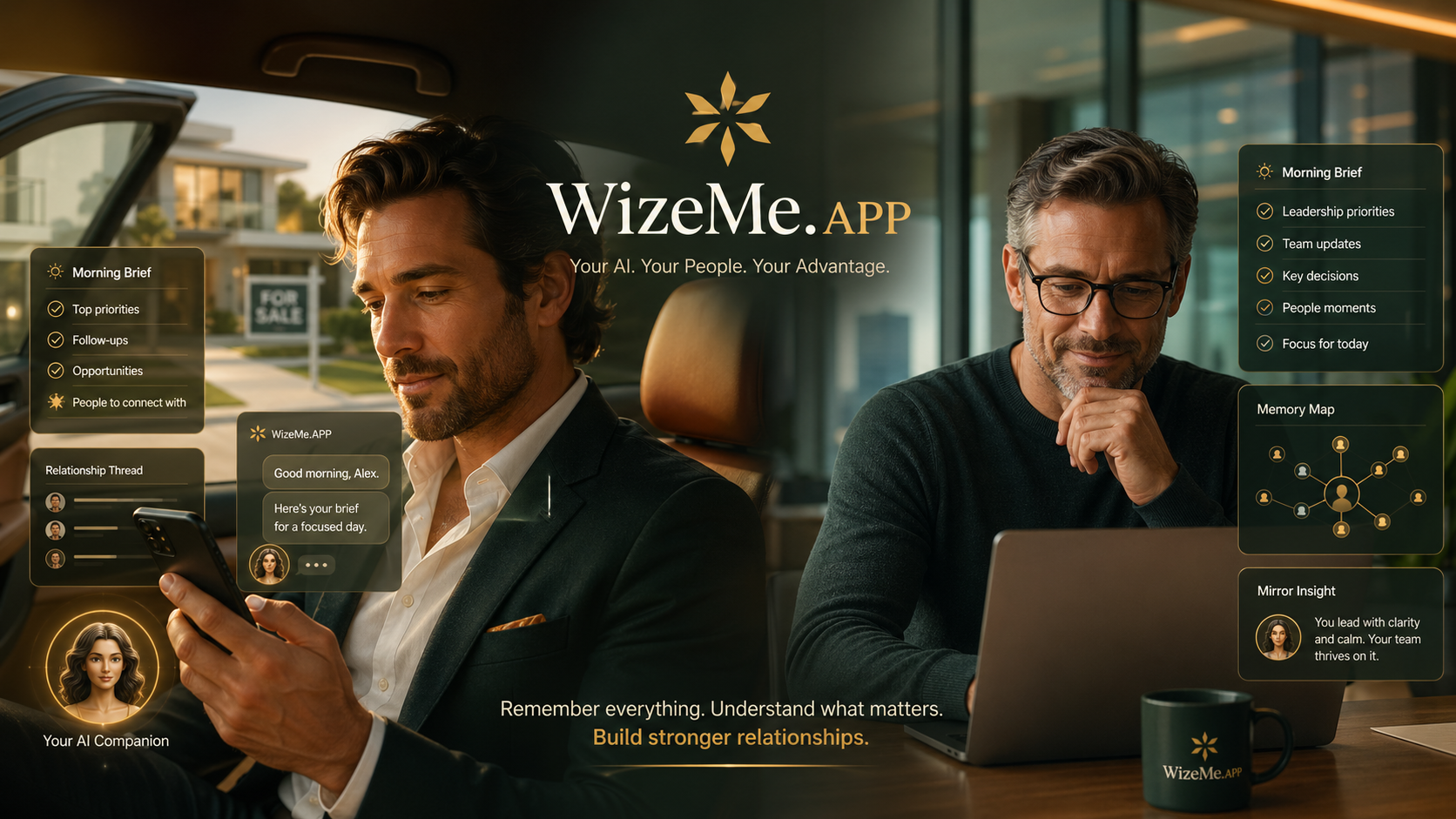
WizeMe.APP is designed around a selected partner and a conversation headquarters. From there, users can work with memory-aware chat, Mirror insight, Morning Briefs, Nightly De-briefs, focused rooms, relationship context, and action chips. These are public product concepts and intended workflows; their value depends on the context a user provides or approves.
The aim is practical: reduce the amount of life a person has to reload before they can make the next useful move. That means treating onboarding, account creation, chat, rooms, memory, and follow-through as one connected experience.
A simple test for any AI partner
Ask four questions. Does it know where you are in the journey? Does it carry relevant context into the next step? Does it keep actions connected to their source? Can it recover from interruption without making you start again?
If the answer is no, a bigger model will not repair the relationship by itself. The handoffs have to work.
Start a continuous conversation with WizeMe.APP.